


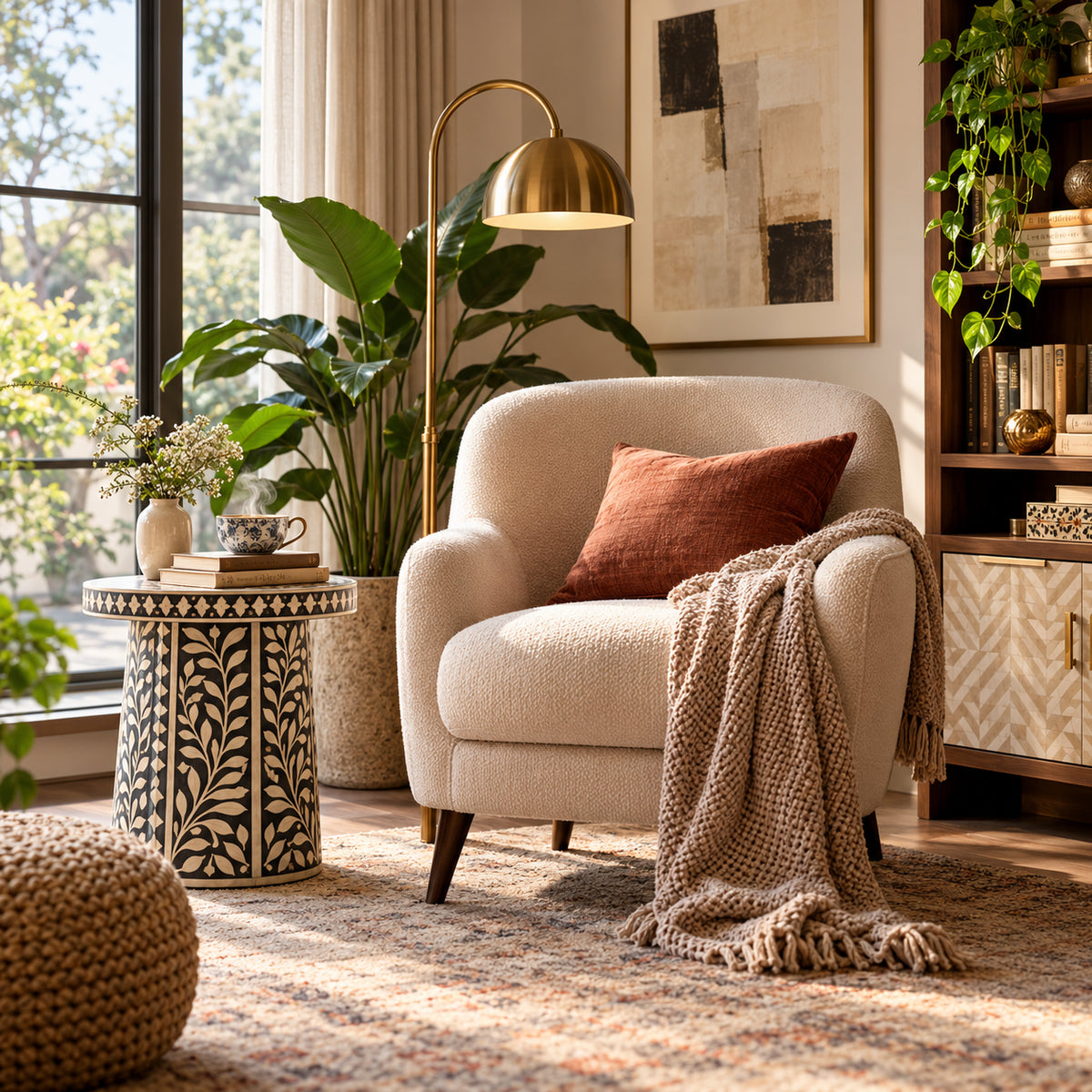
How to Create a Reading Nook at Home: Furniture, Lighting and Styling Ideas
A home should have spaces that do more than look beautiful. It should also have corners where you can slow down, open a book, enjoy your morning tea and escape the distractions of everyday life. A reading nook offers exactly that. It creates a small, personal retreat without requiring an entire room or a major interior renovation.
The best part is that a reading nook can fit almost anywhere. An unused bedroom corner, a sunny window, an awkward space beside a bookshelf or even a quiet section of your living room can become a comfortable reading spot with the right furniture and lighting.
If you are planning to create one, the secret is to combine comfort, practical furniture, thoughtful lighting and a few decorative details. In this guide, we explore how to create a reading nook at home, including ideas for small apartments, bedroom corners, modern interiors and larger homes.
1. Choose the Right Location for Your Reading Nook
Before shopping for furniture, identify where your reading nook will be. The location influences the type of chair, lighting, storage and accessories you will need.
A window-side reading corner
A window is one of the best places for a reading nook because it provides natural daylight and a connection to the outdoors. If you have a wide window ledge or a little unused floor space beside it, you already have a promising starting point.
Position a comfortable chair near the window without blocking the curtains or restricting access. Add a small side table for books, a glass of water or a cup of tea. During the day, natural light makes the area feel welcoming, while an adjustable lamp can provide illumination after sunset.
Avoid placing your chair where direct sunlight creates excessive glare on the pages or makes the seat uncomfortable during warmer months.
An unused bedroom corner
Bedrooms often contain corners that are too small for substantial furniture but large enough for a reading chair. A compact armchair, a slim table and a warm lamp can turn one of these overlooked spaces into a private retreat.
Choose colours that complement your bedding and existing furniture. Neutral upholstery works well with wooden furniture, while a rich green, blue or burgundy chair can introduce contrast.
A quiet corner in the living room
A reading nook does not have to be hidden away. In a living room, it can become a secondary seating area that serves a different purpose from the main sofa.
Place an accent chair at a slight angle to the sofa rather than lining every piece of furniture against the walls. A small rug underneath can help define the reading area without installing partitions.
A space beneath the staircase
Homes with staircases sometimes have unused space beneath the steps. Depending on the available height, this area can accommodate a compact chair, built-in bench or low bookshelf.
Measure the available height and depth carefully before choosing furniture. Good access, adequate lighting and comfortable headroom matter more than filling every inch.
2. Select Comfortable Reading Nook Furniture
Furniture is the foundation of a successful reading corner. Decorative accessories can improve its appearance, but they cannot compensate for an uncomfortable seat or a poorly planned layout.
Choose a chair that supports long reading sessions
Your chair should support your back and allow your feet to rest comfortably. Consider the seat depth, armrest height, backrest angle and overall dimensions before purchasing.
An upholstered armchair is an excellent choice for a traditional reading nook. A compact accent chair works well in a small apartment, while a generously cushioned lounge chair suits a larger room.
Explore CasaGold's chairs and ottomans collection for seating options that can help establish the look of your reading corner.
When choosing a chair, consider these factors:
-
Seat comfort: Choose cushioning that feels supportive rather than excessively soft.
-
Back support: A well-shaped backrest helps you maintain a relaxed posture.
-
Armrests: These provide support when holding a book or using a tablet.
-
Fabric and finish: Select materials that complement your interior and suit your cleaning preferences.
-
Scale: A visually attractive chair is not useful if it overwhelms the available space.
If you enjoy reading for an hour or more at a time, test the chair whenever possible. A seat that feels comfortable for five minutes may not be ideal for a longer session.
Add an ottoman or footrest
An ottoman can make a reading nook feel more relaxed by allowing you to elevate your feet. It can also provide extra seating when guests visit.
In smaller homes, a movable ottoman is more practical than a large footrest permanently attached to the chair. You can reposition it when you need additional floor space.
Make sure the ottoman does not obstruct the main walking route. You should be able to move between the chair and the rest of the room without constantly shifting furniture.
Include a side table for everyday essentials
A side table is one of the most useful additions to a reading nook. It gives you a convenient surface for books, a reading lamp, glasses and other small items.
Choose a table that sits at a comfortable height relative to the chair's armrest. A compact round table is useful where movement is restricted, while a rectangular design can work well against a wall.
CasaGold's side and end tables collection offers a useful starting point when selecting a table for your reading corner.
For a cohesive look, coordinate the table with your chair, flooring or other furniture. You do not need to match every finish exactly. A carefully chosen contrast can make the space feel more considered.
3. Create a Reading Nook in a Small Apartment
You do not need a large house to enjoy a dedicated reading space. With thoughtful furniture choices, even a small apartment can accommodate a comfortable reading corner.
The key is to use the available area without making the room feel crowded.
Use compact, multipurpose furniture
Choose a chair with a relatively small footprint and a side table that provides enough surface space without occupying an entire corner.
A storage ottoman can hold blankets, magazines or books. A narrow shelf can keep reading material organised without taking up much floor space.
Avoid adding several small decorative tables simply because they fit. Too many objects can make a small corner feel cluttered.
Make use of vertical space
When floor space is limited, use the walls. A floating shelf above or beside the chair can hold a small selection of books and a few decorative objects.
Keep frequently used books within easy reach. Shelves placed too high may look attractive but will be inconvenient during everyday use.
Wall-mounted lighting can also free up the side table, provided it is installed safely and positioned to illuminate the reading area effectively.
Use a mirror to improve the visual feel
A strategically placed mirror can reflect natural light and make a compact room feel more open. Choose a position that reflects a window, a pleasant view or an attractive part of the interior.
CasaGold's mirror collection offers decorative options to consider when styling the surrounding space.
A mirror is optional, however. Prioritise seating, lighting and clear movement before adding decorative elements.
Keep the colour palette simple
In a small reading nook, a limited colour palette can make the space feel calm and coordinated.
Try a combination of warm white, beige and natural wood, or introduce a muted green or blue through the chair and cushions. A darker accent can also work well when balanced with lighter walls and sufficient lighting.
The aim is not to eliminate colour. It is to make sure the furniture, walls and accessories work together rather than competing for attention.
4. Get the Lighting Right
Lighting can determine whether your reading nook is comfortable enough to use regularly. A beautiful chair in a dim corner will not be practical if you have to strain your eyes to read.
The best setup combines natural light where available with a dedicated reading light.
Make the most of natural light
If possible, position the chair near a window. Natural daylight is pleasant for reading, journalling and working through printed material.
Consider the direction of the light and your dominant hand. Right-handed readers may find it helpful to have light coming from the left, while left-handed readers may prefer the opposite arrangement. This can reduce shadows falling across the page.
If direct sunlight creates glare, use curtains or blinds to soften the light.
Choose a dedicated reading lamp
A floor lamp is a practical choice when there is enough space beside the chair. It can provide focused illumination while also adding height and visual interest to the room.
A table lamp is suitable when you already have a side table. Adjustable wall lights can work well in compact spaces where floor space is limited.
Look for a lamp that directs light onto your book without shining straight into your eyes. Adjustable heads are useful because you can change the direction as your seating position changes.
Explore CasaGold's lamps collection when planning the lighting for your reading nook.
Select a comfortable light colour
For a relaxed reading corner, warm or neutral-white lighting can create a welcoming atmosphere. The right choice depends on the surrounding light, your preference and the type of reading you do.
Avoid relying entirely on dim decorative lighting. Ambient lighting makes a room inviting, but your reading area still needs enough focused illumination to see text clearly.
If you use a smart bulb or dimmable lamp, adjust the brightness to suit different times of day.
5. Style Your Reading Corner With Textures and Accessories
Once the furniture and lighting are in place, introduce a few details that make the space feel personal.
This is where you can experiment with textiles, colours, artwork and handcrafted decorative pieces.
Add cushions and a soft throw
A cushion can provide additional comfort and introduce colour or texture. A throw blanket is useful during cooler evenings and adds a softer visual layer.
Choose fabrics that work with your chair upholstery. For example, a textured cream cushion can complement a dark green chair, while a patterned cushion can add interest to a neutral seat.
Keep the number of cushions practical. If you need to move several accessories every time you sit down, the arrangement may be more decorative than functional.
Use a rug to define the area
A rug can visually separate your reading nook from the rest of the room, especially in open-plan homes.
Choose a size that allows the chair and at least part of the side table to sit comfortably within the arrangement. A very small rug can make the furniture look disconnected.
CasaGold's rugs collection can help you explore options for adding texture and defining the reading area.
Pay attention to the rug's thickness and placement. A stable, non-slip arrangement is particularly important near chairs that are moved frequently.
Introduce artwork and decorative objects
A small artwork, a framed photograph or a decorative object can give your reading nook a distinct identity.
Choose items that reflect your interests rather than filling every available surface. A single striking object often looks better than several unrelated accessories.
Handcrafted furniture can also become a focal point. An intricately patterned side table or an inlay accent can introduce detail without requiring a large decorative installation.
The important thing is to maintain balance. If the chair already has a bold pattern, keep the surrounding accessories relatively restrained.
6. Reading Nook Ideas for Different Interior Styles
Your reading nook should feel connected to the rest of your home. The same basic furniture arrangement can look completely different depending on the materials, colours and decorative details you choose.
Modern minimalist reading nook
A minimalist reading nook works well with clean lines, a simple accent chair, a compact table and restrained accessories.
Choose neutral colours such as ivory, beige, grey or soft brown. Let the chair's shape and the quality of the materials create visual interest instead of adding unnecessary decoration.
Keep books neatly arranged and use concealed storage where practical. The result should feel intentional rather than empty.
Warm contemporary reading corner
For a warmer contemporary look, combine upholstered seating with natural textures, wood finishes and soft lighting.
A curved chair can soften a room filled with straight lines, while a rounded side table can make the arrangement feel more relaxed.
Layer different textures through a rug, cushion and throw, but keep the overall colour palette connected.
Eclectic reading nook
If you enjoy interiors with more personality, combine different colours, patterns and materials.
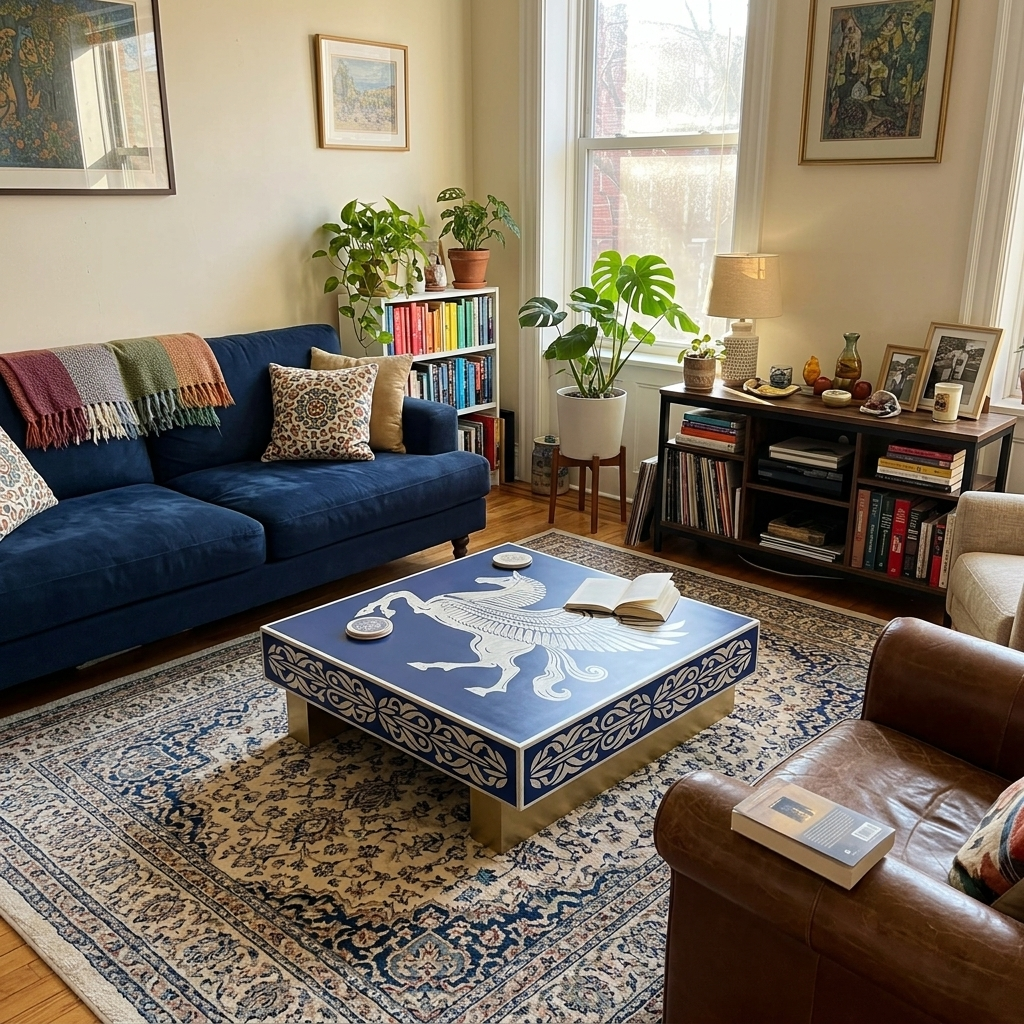
A statement chair can sit beside a contrasting table, while artwork and books introduce additional character. The trick is to repeat at least one colour or material across the arrangement so that the different pieces still feel connected.
Handcrafted furniture can be particularly effective in an eclectic space because it brings pattern and detail into the room.
Classic and elegant reading corner
For a classic look, choose a well-upholstered armchair, a refined side table and a traditional floor or table lamp.
Rich blue, deep green, warm neutrals and darker wood finishes can create an elegant atmosphere. A framed artwork and a neatly arranged collection of books can complete the look.
Avoid overcrowding the space with decorative objects. A few well-chosen pieces create a stronger impression than a crowded arrangement.
7. How to Create a Bedroom Reading Nook
A bedroom reading nook can be especially useful if you prefer reading before sleeping or want a quiet place away from the main living areas.
Start by identifying a corner that does not interfere with wardrobe access, the bedroom door or movement around the bed.
Choose furniture that suits the bedroom
A compact upholstered chair is often a good choice. If space permits, add a side table for a book, a glass of water and a lamp.
If the bedroom is particularly small, consider whether an existing bench or a comfortable chair can serve more than one purpose.
The furniture should complement the bedroom rather than make it feel like two unrelated spaces have been squeezed together.
Create separation without adding walls
A rug, a floor lamp or a different cushion colour can visually distinguish the reading corner from the sleeping area.
Position the chair so that it faces a window, an attractive wall or a pleasant view of the room. This gives the corner a clear purpose.
You can also use a small bookshelf to create a subtle boundary, provided it does not block natural light or restrict movement.
Keep the atmosphere restful
Bedrooms generally benefit from a restrained approach to decoration. Use soft textures, comfortable seating and lighting that feels appropriate for the evening.
If you read on a tablet, ensure the lighting around you remains comfortable rather than relying on a bright screen in an otherwise dark room.
The goal is to create a space that encourages relaxation, not one that feels like another work desk.
8. Common Reading Nook Design Mistakes to Avoid
Even a simple reading corner can become inconvenient when practical details are overlooked.
Choosing furniture that is too large: Measure the available space before buying a chair. Leave enough room to sit down, stand up and move around the furniture.
Ignoring lighting: A corner that looks beautiful during the day may become unusable after sunset. Plan the reading lamp from the beginning.
Using an uncomfortable chair: A stylish chair should still support your posture. Check seat depth, armrests and back support.
Overdecorating the area: Too many cushions, objects and small tables can make the corner difficult to use. Start with essentials and add accessories gradually.
Forgetting storage: Books and magazines need a practical home. A small shelf, basket or storage ottoman can prevent clutter from building up.
Blocking circulation: Make sure the chair does not obstruct doors, wardrobes, windows or the main walking route.
Ignoring electrical access: Plan the location of lamps and charging points before finalising the furniture layout. Avoid trailing cables across walkways.
A successful reading nook is not the one with the most accessories. It is the one you actually enjoy using.
9. How Much Space Do You Need for a Reading Nook?
The amount of space required depends on the furniture you select and the room's layout. You do not need a dedicated room, but you should allow enough space for comfortable movement.
As a practical starting point, consider the following approximate planning ranges. These are layout guidelines, not fixed minimum requirements.
|
Reading nook type |
Approximate planning area |
|---|---|
|
Compact chair and side table |
4 to 6 sq. ft. of furniture footprint, plus access space |
|
Chair, side table and floor lamp |
8 to 15 sq. ft. |
|
Lounge chair with ottoman |
12 to 20 sq. ft. |
|
Reading corner with chair and bookshelf |
15 to 25 sq. ft. |
Actual dimensions will vary according to the products and the room. A chair with wide arms needs more space than a slim accent chair, while an ottoman requires additional room when extended.
Before ordering furniture, measure the width and depth of the area. Use masking tape to mark the approximate chair and table footprint on the floor. This simple exercise helps you understand how the arrangement will feel before making a purchase.
Also measure doorways, lifts and staircases if the furniture is being delivered to an apartment. Confirm the product's actual dimensions and delivery requirements with the seller.
10. A Simple Reading Nook Shopping Checklist
If you are starting from scratch, avoid purchasing every item at once. Begin with the essentials and build the arrangement around your needs.
-
A comfortable chair with suitable back support.
-
A compact side table for books and everyday items.
-
A dedicated reading lamp.
-
A cushion or throw for additional comfort.
-
A rug, if it helps define the area.
-
A shelf or basket for books and magazines.
-
One or two decorative pieces that complement the room.
Start with the chair and lighting. These have the greatest impact on how the space functions. Add the remaining items once you have tested the arrangement.
When shopping, compare dimensions, finishes and practical details rather than choosing furniture based on photographs alone. A piece should suit your actual space, not just the styling in a product image.
Frequently Asked Questions
1. How do I create a reading nook in a small room?
Choose a compact chair, a small side table and a focused reading lamp. Use wall shelves to save floor space and keep accessories to a minimum. Position the furniture so it does not obstruct doors or walkways.
2. What furniture is essential for a reading nook?
The essentials are comfortable seating and adequate lighting. A side table is highly useful for books and other items. Rugs, ottomans, cushions and shelving can be added depending on the available space.
3. Which chair is best for a reading corner?
An upholstered armchair or a supportive accent chair is a practical choice for most homes. Look for comfortable seat depth, back support and suitable armrests. The ideal chair depends on your body, reading habits and room dimensions.
4. How do I light a reading nook without a ceiling light?
Use a floor lamp, table lamp or properly installed wall light. Position the light so it illuminates the page without shining directly into your eyes. Natural daylight can supplement artificial lighting during the day.
5. Can I create a reading nook in my bedroom?
Yes. An unused bedroom corner can accommodate a chair, a side table and a lamp. Keep the arrangement compact and make sure it does not interfere with wardrobe access, the bed or normal movement.
6. How can I make my reading corner look luxurious?
Focus on comfortable seating, coordinated materials, layered lighting and a restrained selection of accessories. A well-chosen accent chair, an elegant side table and quality textiles can create a refined appearance without overcrowding the space.
7. Where should I place a reading nook in my home?
A window-side corner, bedroom, living room, spare room or unused area beneath a staircase can all work. Choose a location with sufficient space, comfortable lighting and minimal disruption from household activity.
Final Thoughts
A reading nook is a small addition that can make your home more personal and enjoyable. It gives books, quiet moments and everyday relaxation a dedicated place without requiring a separate room.
Start by selecting a comfortable chair and planning the lighting. Add a practical side table, organise your books and introduce a few textures or decorative details that suit your interior style.
Whether you are furnishing a compact apartment or a spacious home, thoughtful furniture choices can turn an unused corner into a place you look forward to spending time in.
Explore CasaGold's furniture collections and home décor collections for inspiration when planning a reading nook that combines comfort, functionality and individual style.

Written by Cheena Bhasin



Leave a comment
This site is protected by hCaptcha and the hCaptcha Privacy Policy and Terms of Service apply.