


Bone Inlay Furniture for Small Spaces: 9 Smart Styling Ideas for Indian Homes
Living in a compact apartment does not mean giving up on beautiful furniture. In fact, a carefully chosen statement piece can make a small home feel more personal, considered and luxurious without requiring a complete interior makeover.
The real challenge is finding furniture that adds character without taking over the room.
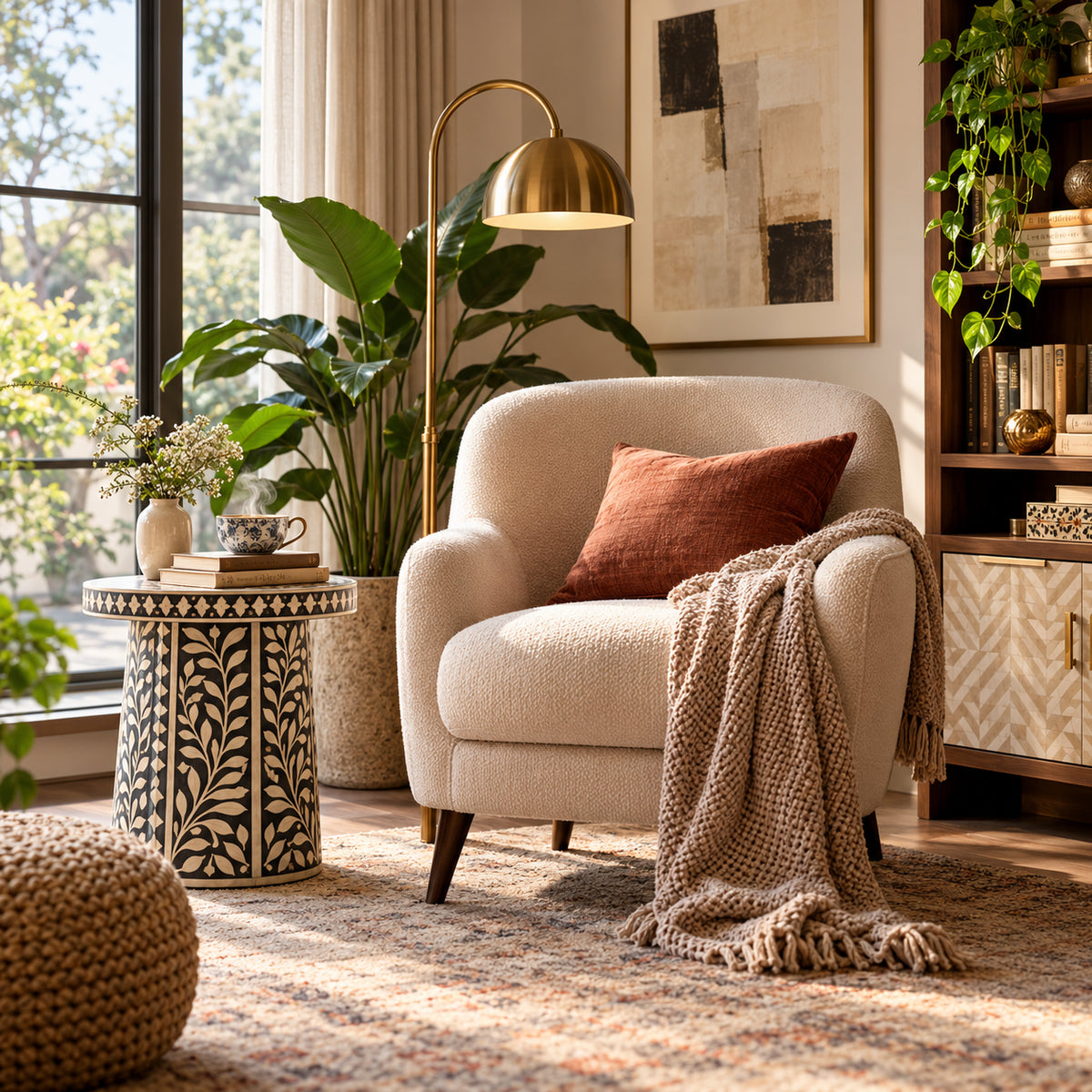
Bone inlay furniture offers an interesting solution. Its intricate patterns, distinctive colours and handcrafted appearance can transform an otherwise simple interior. However, choosing the right size, shape, colour and placement matters even more when floor space is limited.
Whether you live in a Gurgaon apartment, a compact Mumbai flat or a modern home in Bengaluru, the right furniture arrangement can help you balance aesthetics with everyday functionality.
In this guide, we explore nine practical ways to incorporate bone inlay furniture into smaller homes, along with layout tips, common mistakes and ideas for making every piece count.
1. Start with the Size of Your Room, Not the Furniture Design
One of the most common mistakes when furnishing a small apartment is falling in love with a piece before checking whether it will fit comfortably.
A table may look beautiful in a product photograph, but its proportions can feel entirely different in a compact living room.
Before choosing furniture, measure the available floor area and identify the walking routes you need to keep clear. Consider door openings, balcony access, drawers, cupboard doors and the space required to move around your sofa.
For example, a large rectangular coffee table might suit a spacious drawing room but obstruct movement in a narrow apartment living room. A smaller round or oval design could provide a similar decorative effect while making the arrangement feel less rigid.
The same principle applies to console tables and accent cabinets. Measure the wall where you intend to place the furniture rather than estimating the available space by sight.
Create a simple floor plan using the room's measurements, then mark out the furniture footprint with masking tape if necessary.
This quick exercise helps you understand how much room a piece will occupy before you order it.
If you are comparing different designs, explore the CasaGold bone inlay furniture collection and shortlist pieces based on their listed dimensions before comparing patterns and colours.
2. Choose a Bone Inlay Coffee Table That Suits a Small Living Room
A coffee table often becomes the centre of attention in a living room. In a smaller space, it needs to work as both a practical surface and a decorative feature.
The trick is to choose a design that complements your sofa without restricting movement.
Round tables for compact layouts
Round coffee tables can work particularly well in smaller seating areas because they have no sharp corners and can soften an arrangement dominated by rectangular furniture.
They are useful when the available walking space is limited or when the sofa and chairs form a relatively tight seating arrangement.
A patterned round bone inlay table can introduce visual detail without the rigid appearance of another large rectangular object.
Oval tables for narrow rooms
An oval table offers a longer surface while maintaining rounded ends. It can be a good option for a narrow living room where a wide square table would make movement awkward.
Rectangular tables for defined seating areas
Rectangular tables can still work beautifully in small homes, particularly when the sofa and available floor space are also rectangular.
Look for a proportionate design instead of choosing the largest table that will physically fit.
A useful starting point is a table approximately two-thirds the length of the sofa, although the ideal proportion depends on the seating arrangement. Leave enough clearance for people to move around comfortably, with around 14 to 18 inches between the sofa and table as a common planning guideline.
Browse the CasaGold coffee table collection to compare round, oval and rectangular styles.
3. Use a Narrow Console Table to Make an Entryway Feel Designed
The entrance of an apartment is often overlooked. Shoes, keys, bags and everyday essentials can quickly make it feel cluttered.
A slim console table gives these items a more organised place while creating an opportunity to introduce handcrafted furniture into the home.
In a narrow entrance, prioritise depth over decoration. A shallow console can provide a surface for a small lamp, a key tray or a vase without projecting too far into the walking path.
Consider these combinations:
-
A black-and-white inlay console against a warm white wall for a crisp, contemporary look.
-
A teal or green console against beige walls for a controlled pop of colour.
-
A patterned console beneath a simple mirror to create a focal point without filling the wall with multiple decorative objects.
Avoid placing oversized lamps, large sculptures and several decorative trays on a small console. One or two thoughtfully selected accessories are often enough.
A mirror above the furniture can reflect light and help the entrance feel more open, especially when natural light reaches the hallway.
For suitable designs, explore the CasaGold bone inlay console table collection.
The important thing is to preserve a comfortable passage. A beautiful entrance should still be easy to walk through when people arrive carrying shopping bags or moving between rooms.
4. Use Pattern as Your Main Decorative Feature
Small rooms do not necessarily need plain furniture. They need a clear visual hierarchy.
Bone inlay furniture often features detailed geometric, floral or other decorative motifs. These patterns can provide enough visual interest to make additional ornaments unnecessary.
Consider a living room with cream walls, a neutral sofa, simple curtains and natural flooring. A patterned coffee table can become the main focal point, giving the room character without requiring colourful furniture across every surface.
This approach is especially useful in rental apartments, where changing flooring, wall finishes or built-in cabinetry may not be practical.
Give statement furniture room to stand out
Avoid combining several large patterned surfaces in the same small area.
For example, a decorative coffee table may become visually overwhelming when paired with heavily patterned curtains, an elaborate rug and multiple statement cushions.
Instead, allow the furniture to lead. Choose quieter textiles and repeat one or two colours from the inlay pattern elsewhere in the room.
A cushion, framed print or ceramic accessory can establish that connection without competing with the main piece.
Think about visual weight
A piece with a bold, high-contrast design can attract more attention than a similarly sized item with a subtle pattern.
This does not mean you should always choose lighter colours. It means the pattern, surrounding furniture and available space should work together.
In compact homes, one strong focal point often produces a more cohesive result than several competing statement pieces.
5. Choose Colours That Help a Small Room Feel Balanced
Furniture colour can influence how spacious a room feels, but there is no single colour that works for every small home.
Natural lighting, wall colour, flooring and the size of the furniture all affect the final appearance.
White and cream for a soft, open look
White or cream inlay against a light background creates a restrained, elegant combination. It can work especially well in apartments with limited natural light or neutral interiors.
To avoid a flat appearance, introduce texture through rugs, curtains, cushions and natural wood.
Black and white for contrast
Black-and-white bone inlay furniture can create a defined focal point against light walls and understated seating.
In a compact living room, use this combination selectively rather than repeating strong black patterns across every surface.
Teal and green for controlled colour
Teal, sea green and deeper green shades can add personality without requiring an entirely different room palette.
These colours can pair well with beige upholstery, warm wood tones and brass-coloured accessories.
If your room already contains colourful artwork or upholstery, choose a quieter furniture finish to maintain balance.
Match undertones, not just colours
A warm beige wall, reddish flooring and cool grey furniture may create a less cohesive result if their undertones are not considered together.
Look at the room as a whole before selecting a statement piece.
When possible, review product photographs in context and compare the colours with your existing furniture under both daylight and evening lighting.
6. Make Your Bedroom Feel Spacious with One Decorative Accent
A small bedroom rarely benefits from introducing multiple large furniture pieces simply for decoration.
Instead, select one area where a statement piece will add the most value.
Bedside furniture is an effective starting point. A compact bone inlay bedside table can introduce intricate detail beside an upholstered or wooden bed without requiring a major change to the room.
Keep the bedside arrangement practical
Check the available space on both sides of the bed. Consider the position of sockets, light switches, wardrobes and the route between the bed and the door.
Choose a bedside table that provides enough usable surface for everyday essentials without crowding the walkway.
A patterned table can become the bedroom's decorative accent, especially when paired with plain bedding, simple lamps and understated wall finishes.
Avoid filling every corner
If you already have a large wardrobe and a substantial bed frame, adding several decorative cabinets may make the room feel crowded.
Use your existing furniture as the foundation. Introduce a new statement piece only where it solves a practical need or improves the overall composition.
You can also create visual continuity by repeating the accent colour through a cushion, lampshade or piece of artwork.
The result is a bedroom that feels designed rather than filled.
7. Look for Furniture That Combines Storage and Style
In smaller homes, furniture should ideally contribute something beyond appearance.
A cabinet with useful internal storage, a console with drawers or a well-designed side table can help keep everyday belongings organised while adding a decorative element.
The specific storage options depend on the model, so always check the product description rather than assuming every piece includes drawers or compartments.
Use closed storage to control clutter
Small rooms can look busy when chargers, paperwork, remote controls and other household items remain visible.
Furniture with enclosed storage can help keep those objects out of sight while maintaining easy access.
A statement cabinet can also replace several smaller storage items that would otherwise occupy different parts of the room.
Avoid choosing storage that is too large
More storage is not automatically better. A deep cabinet can take up valuable floor area and interrupt movement.
Compare internal storage capacity with the furniture's external dimensions. Choose a size that accommodates what you actually need to store.
Keep styling simple
Once your storage furniture is in place, avoid covering its entire surface with accessories.
A table lamp, a small arrangement of books or one decorative object can be enough to finish the look.
The best compact interiors make everyday organisation feel effortless rather than introducing more objects that need constant rearranging.
8. Use Height, Lighting and Mirrors to Improve the Overall Effect
When floor space is limited, think about the wall and vertical space around the furniture as well.
A carefully positioned mirror, wall artwork or appropriately scaled lighting can make a decorative furniture piece feel more integrated into the room.
For example, an inlay console beneath a mirror establishes a clear entrance arrangement. In a living room, artwork placed above a low cabinet can connect the furniture with the rest of the interior.
Avoid oversized wall décor
The artwork or mirror should complement the width and visual weight of the furniture beneath it.
A very small mirror over a large console can feel disconnected. An oversized frame can overwhelm a narrow wall.
Proportion matters more than filling every available patch of wall.
Use lighting to highlight texture
A table lamp or nearby wall light can draw attention to decorative patterns and surface details.
However, ensure that the lighting serves a practical purpose and does not create excessive glare on reflective finishes.
Natural daylight also changes the way colours and textures appear, so consider how the room looks at different times of day.
Leave some negative space
Not every wall requires a mirror, artwork and shelves.
Empty wall space can help a statement piece stand out and stop a compact room from appearing over-decorated.
The aim is to create a relationship between the furniture, its surroundings and the light in the room.
9. Avoid These Common Mistakes When Furnishing a Small Home
Even a beautiful piece of furniture can look out of place when the overall arrangement has not been considered.
Here are five mistakes worth avoiding.
Buying before measuring: Always compare the furniture's dimensions with the available space. Include door openings, drawers and circulation routes.
Choosing too many statement pieces: Several heavily patterned items can compete for attention. Give one main piece the leading role.
Ignoring the flooring: Furniture colours can appear different against warm timber, grey flooring or polished stone. Review the combination before making a decision.
Prioritising looks over daily use: Consider how the furniture will function when you entertain guests, clean the room or use the space every day.
Crowding surfaces with accessories: Decorative items should complement the furniture, not hide it. Keep tabletops usable and allow the design to remain visible.
A well-furnished small home is not one in which everything fits by a few centimetres. It is one in which movement feels natural, storage is practical and the furniture contributes to a clear overall design.
A Simple Room-Planning Checklist Before You Buy
Before ordering bone inlay furniture for your home, run through this quick checklist:
-
Measure the intended location and all access routes.
-
Compare the furniture's width, depth and height with your existing pieces.
-
Check whether the shape suits the room's circulation pattern.
-
Decide which furniture item will be the main focal point.
-
Coordinate the finish with the flooring, walls and upholstery.
-
Check product specifications, storage details and care instructions.
-
Leave enough space for doors, drawers and everyday movement.
These steps can help you avoid an expensive mismatch and make the most of the space you already have.
Frequently Asked Questions
Is bone inlay furniture suitable for small apartments?
Yes. Bone inlay furniture can work well in compact apartments when the dimensions, placement and design are carefully chosen. A smaller coffee table, slim console or compact bedside table can introduce decorative detail without occupying unnecessary floor space.
Which bone inlay furniture is best for a small living room?
The best choice depends on your layout. A round coffee table can soften a compact seating arrangement, an oval design can work well in a narrow room, and a slim console can add character along an available wall.
Does dark bone inlay furniture make a room look smaller?
Not necessarily. Dark furniture creates stronger visual contrast, but the effect depends on its size, surroundings and placement. One dark accent against light walls can add depth, while multiple oversized dark pieces may make a compact room feel heavier.
How do I decorate a small entryway?
Start with a clear walking path and choose appropriately sized storage. A slim console table, a mirror and one or two useful accessories can make an entryway feel organised without crowding it.
Can I use bone inlay furniture in a minimalist home?
Yes. A single patterned furniture piece can introduce craftsmanship into a minimalist interior. Keep the remaining furniture and decorative accessories relatively simple so the inlay design remains the main feature.
What should I check before ordering handcrafted furniture online?
Review the full dimensions, materials, available finishes, delivery information, care instructions and return policy. Check product photographs carefully and contact the seller for clarification if an important specification is missing.
Create a More Considered Home with CasaGold
A small apartment does not need more furniture to feel luxurious. It needs the right furniture, selected with attention to proportion, colour, function and detail.
Bone inlay furniture can introduce craftsmanship and personality into compact interiors without requiring a complete redesign. A well-proportioned coffee table, a slim entrance console or a decorative bedside table can make a meaningful difference when the surrounding space is kept balanced.
Start with the furniture you already own, identify where an accent piece would add the most value and measure the space before choosing a design.
Explore the CasaGold bone inlay furniture collection, compare options in the coffee table collection, or discover styles in the bone inlay console table collection.
The goal is not to fill every corner. It is to create a home where every piece has a purpose, every detail feels intentional and the space remains comfortable to live in.

Written by Cheena Bhasin



Leave a comment
This site is protected by hCaptcha and the hCaptcha Privacy Policy and Terms of Service apply.