

Inlay Furniture for Boutique Hotels, Cafés and Villas: A Designer's Guide
In hospitality and luxury residential design, furniture does more than fill a room. The right piece establishes the mood, creates a visual identity and gives guests something memorable to associate with the space.
That is exactly why inlay furniture has become such an interesting choice for boutique hotels, cafés and luxury villas.
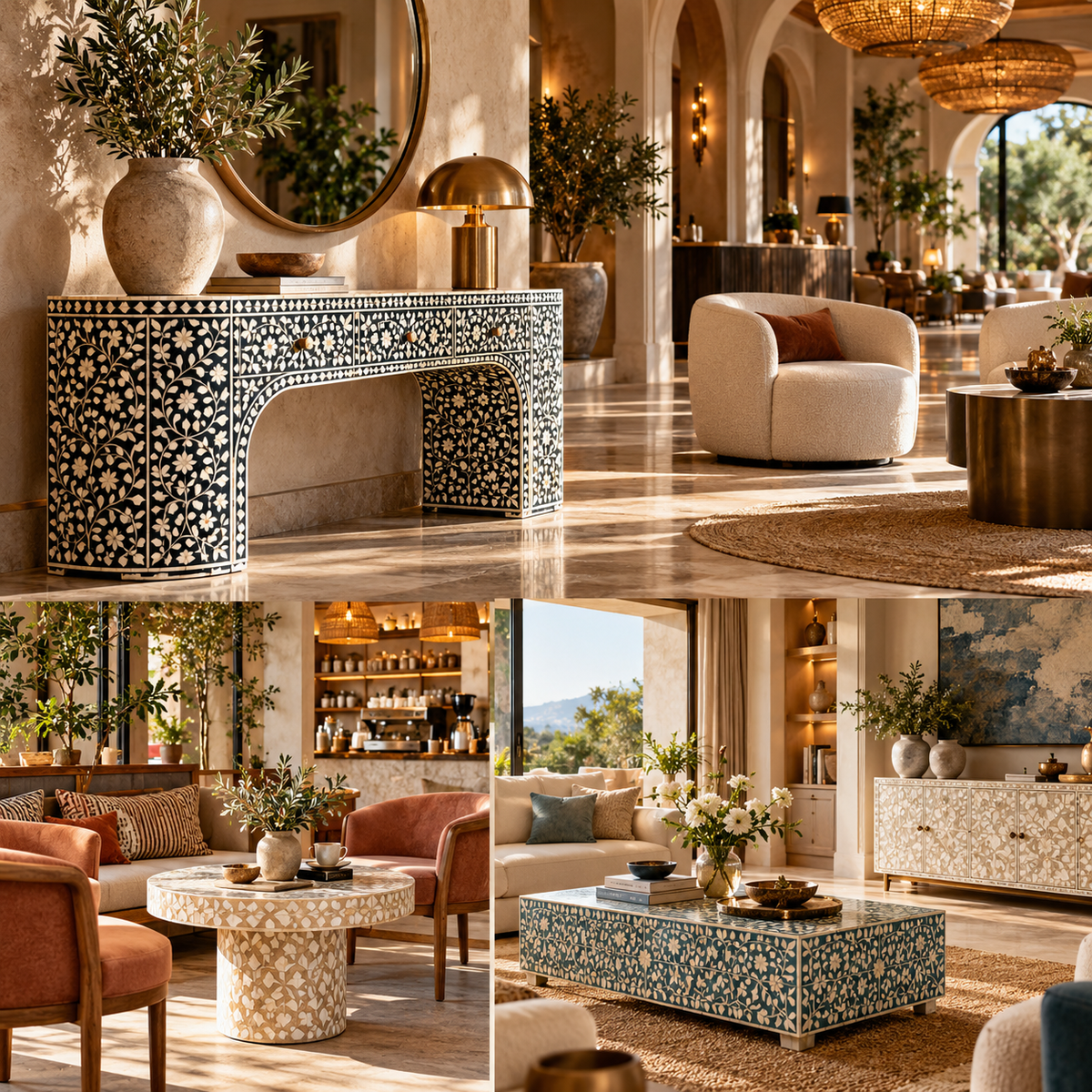
Unlike conventional furniture, handcrafted inlay pieces combine function with decorative artistry. Intricate geometric patterns, botanical motifs, mother of pearl, bone inlay, contrasting surfaces and carefully finished frames can turn an ordinary console, coffee table, cabinet or sideboard into a focal point.
For designers working on spaces where character matters, inlay furniture offers an opportunity to bring craftsmanship into contemporary interiors without making the space feel traditional or dated.
CasaGold creates a wide range of handcrafted inlay furniture designed around this idea, from coffee tables and consoles to cabinets, sideboards, beds and statement pieces.
This guide explores how designers can use inlay furniture effectively across boutique hotels, cafés and villas, how to select the right pieces, where to place them and what to consider before specifying them for a project.
What Makes Inlay Furniture Different?
Inlay furniture is created by decorating a furniture surface with contrasting materials that are carefully arranged to form a pattern or design.
Depending on the piece, this can include bone inlay, mother of pearl, resin and other decorative materials combined with engineered wood, hardwood and metal or brass-finished details.
The appeal is not simply the material itself. It is the craftsmanship and visual rhythm created when hundreds or thousands of small elements come together to form a cohesive pattern.
This makes an inlay cabinet or console fundamentally different from a standard mass-produced furniture piece.
The surface becomes part of the design language.
A black-and-white geometric cabinet can create a dramatic contemporary statement. A teal or indigo inlay table can introduce colour into a neutral interior. A mother-of-pearl piece can bring subtle luminosity to a sophisticated hospitality environment.
CasaGold's collection demonstrates how traditional inlay craftsmanship can be translated into contemporary silhouettes, including consoles, coffee tables, cabinets, media units and bedroom furniture. Explore CasaGold's inlay furniture collection
Why Inlay Furniture Works So Well in Boutique Hotels
Boutique hotels have a design challenge that large standardized hotels do not.
They need consistency, but they also need personality.
A boutique hotel cannot rely entirely on generic furniture packages if the goal is to create an experience guests remember. Every visual touchpoint contributes to the identity of the property.
This is where inlay furniture becomes particularly valuable.
1. It Creates an Immediate Focal Point
Consider a hotel lobby with neutral stone flooring, textured walls, warm lighting and understated seating.
The room may be elegant, but it can still feel incomplete.
An intricately patterned inlay console positioned behind the reception seating or against a feature wall can immediately give the space a visual anchor.
Instead of adding another piece of conventional furniture, the designer introduces something guests are naturally encouraged to look at.
CasaGold's Inlay Console collection includes designs suited to entryways, living areas and statement walls, with different colours, patterns and silhouettes.
2. It Supports a Distinctive Brand Identity
Boutique hotels compete on experience.
The furniture should therefore reinforce the story of the property.
A Jaipur-inspired boutique hotel could use intricate geometric and floral inlay patterns alongside natural textiles, brass lighting and handcrafted accessories.
A contemporary urban hotel could take the opposite approach, using black-and-white geometric inlay furniture against concrete, marble or dark wood.
A coastal property could introduce softer colours such as ivory, teal or sea green.
The important point is that inlay furniture does not have to dictate an entire design style. It can be adapted to support the larger concept.
3. It Works Across Guest Touchpoints
Inlay furniture is not restricted to the lobby.
Designers can use it in:
Guest room entry consoles
Bedside tables
Mini bar cabinets
Sideboards
Corridor consoles
Lounge areas
Executive suites
Restaurant spaces
Reception areas
Boutique retail corners
The same material language can therefore appear throughout a property without every room looking identical.
Inlay Furniture for Hotel Guest Rooms
Guest rooms require a more restrained approach.
The objective is not to fill the room with decorative furniture. One or two carefully selected inlay pieces can be enough.
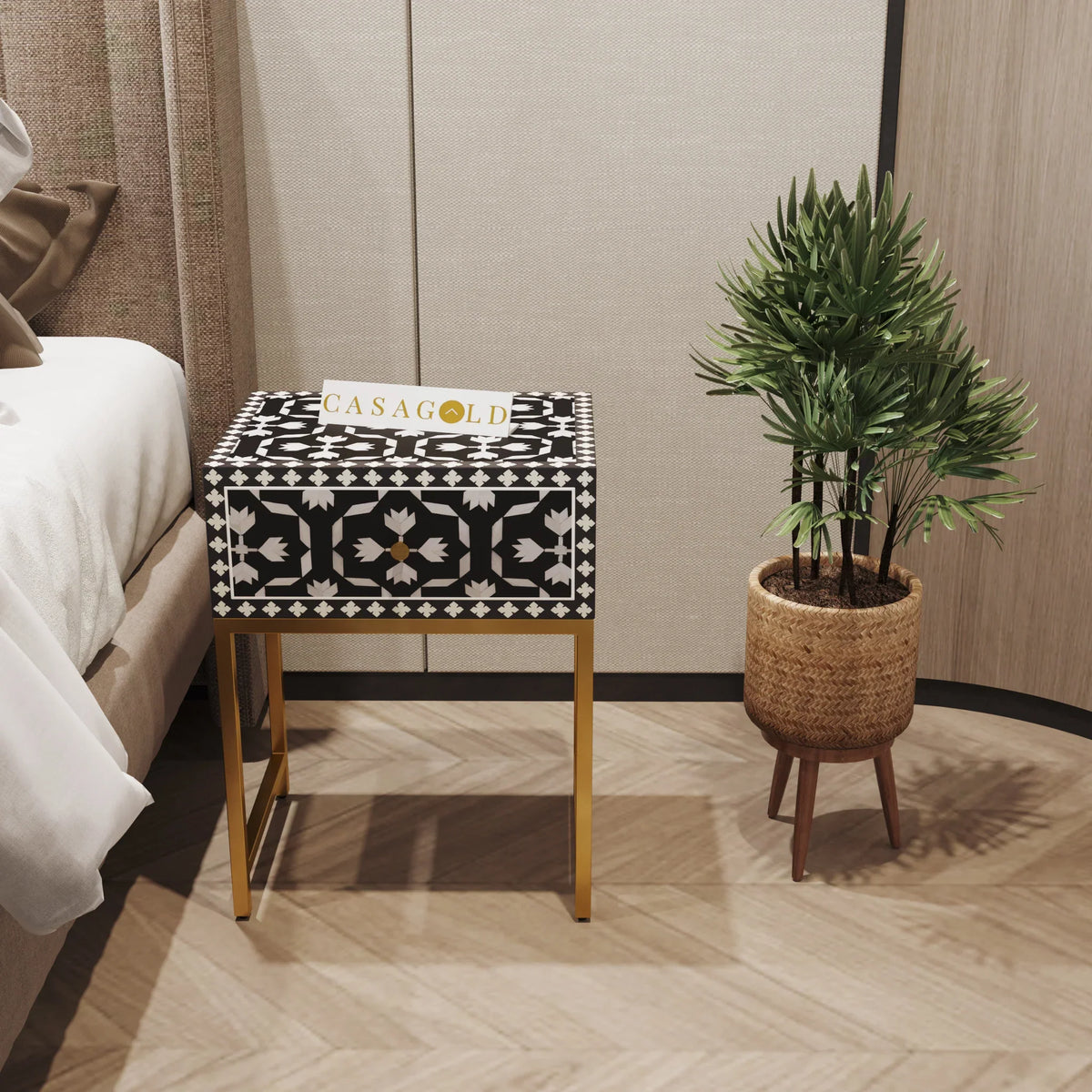
A bedside table is one of the easiest ways to introduce the material.
A pair of matching inlay bedside tables can frame an upholstered bed while providing storage and creating symmetry.
For a larger suite, an inlay cabinet can work as a minibar, storage unit or decorative sideboard.
CasaGold's range includes inlay bedside tables with different patterns and colour options, allowing designers to coordinate the furniture with upholstery, wall colours and other decorative elements.
For premium suites, an inlay bed can become the centrepiece of the room.
The key is restraint.
If the bed has a highly detailed inlay design, keep the surrounding furniture quieter. Let the craftsmanship breathe.
How Cafés Can Use Inlay Furniture Without Looking Overdesigned
Cafés present a different challenge.
Unlike hotels and villas, cafés usually need to balance aesthetics with high daily foot traffic.
The furniture has to photograph well, contribute to the atmosphere and remain practical.
Inlay furniture works best when used strategically.
Reception and Ordering Areas
A small inlay console behind the reception or ordering counter can create a memorable first impression.
This is particularly useful for cafés with a strong visual identity.
Instead of using generic shelving, a designer can combine an inlay console with ceramics, plants, framed artwork or branded objects.
The result becomes an intentional display rather than simple storage.
Statement Coffee Tables
Inlay coffee tables can work particularly well in lounge-style cafés.
A round or oval table introduces a softer shape into an environment dominated by rectangular tables and chairs.
CasaGold offers several inlay coffee table designs in different colours and patterns, making it possible to use the same design language across different café concepts.
Browse CasaGold's inlay coffee tables
Small Café Corners
Not every part of a café needs to be heavily designed.
A single statement side table beside an accent chair can create a highly photographable corner.
This is particularly valuable for cafés that depend on social media visibility.
Customers naturally photograph distinctive interiors, and furniture with intricate patterns can become part of the visual content generated around the brand.
Designing Luxury Villas With Inlay Furniture
Luxury villas provide more freedom.
Unlike commercial interiors, residential projects can be designed around the owner's personality, travel experiences and preferred aesthetic.
Inlay furniture can therefore be used as both functional furniture and collectible design.
Entrance Foyers
The entrance is one of the strongest locations for an inlay console.
A long console positioned against a statement wall can establish the design language before someone enters the main living area.
Pair it with a large mirror, sculptural lighting or carefully selected decorative objects.
Avoid overcrowding the surface.
The pattern on the furniture should remain visible.
CasaGold's bone inlay console collection is particularly relevant for entryways and statement walls.
Living Rooms
The living room is where inlay furniture can become more expressive.
An inlay coffee table can sit between neutral sofas and a textured rug, creating contrast without introducing another dominant colour.
Alternatively, a sideboard can sit against a large wall and become a decorative anchor.
A useful designer principle is to combine one highly detailed inlay piece with simpler surrounding furniture.
For example:
Neutral boucle sofa
Plain textured rug
Sculptural lighting
One patterned inlay coffee table
Minimal decorative objects
This creates contrast rather than visual competition.
Dining Spaces
Inlay sideboards can work beautifully in dining rooms.
They provide practical storage for tableware while also creating a decorative background for the dining table.
A sideboard with geometric inlay can sit beneath artwork or a large mirror, while warm lighting highlights the pattern.
The same principle applies to bar cabinets.
For villas with entertainment spaces, an inlay bar cabinet can turn a functional storage requirement into a design feature.
CasaGold's cabinet collection includes multiple inlay sideboards, storage cabinets, media units and bar cabinet designs. Explore CasaGold's cabinet collection
Choosing the Right Inlay Pattern
Pattern selection should always relate to the architecture.
A common mistake is choosing furniture simply because the pattern looks attractive in isolation.
Instead, look at the lines already present in the room.
If the interior has curved sofas, arched doorways and rounded lighting, softer circular or flowing patterns can complement the architecture.
If the space has strong architectural geometry, a geometric inlay pattern can reinforce it.
For minimalist interiors, high-contrast patterns such as black and ivory can provide visual interest.
For warmer interiors, softer neutrals and natural tones can create a more subtle effect.
CasaGold's collection includes geometric, floral, Moroccan-inspired and contemporary patterns, giving designers room to work within different design directions.
Choosing Colours for Hospitality Interiors
Colour selection becomes especially important in commercial projects.
A hotel or café may have an established brand palette, and the furniture should support it rather than compete with it.
Black and white inlay works well in monochromatic interiors.
Teal can introduce an elegant jewel-toned accent.
Indigo can work with deep blue, brass and warm neutral palettes.
Sea green can complement botanical interiors and natural textures.
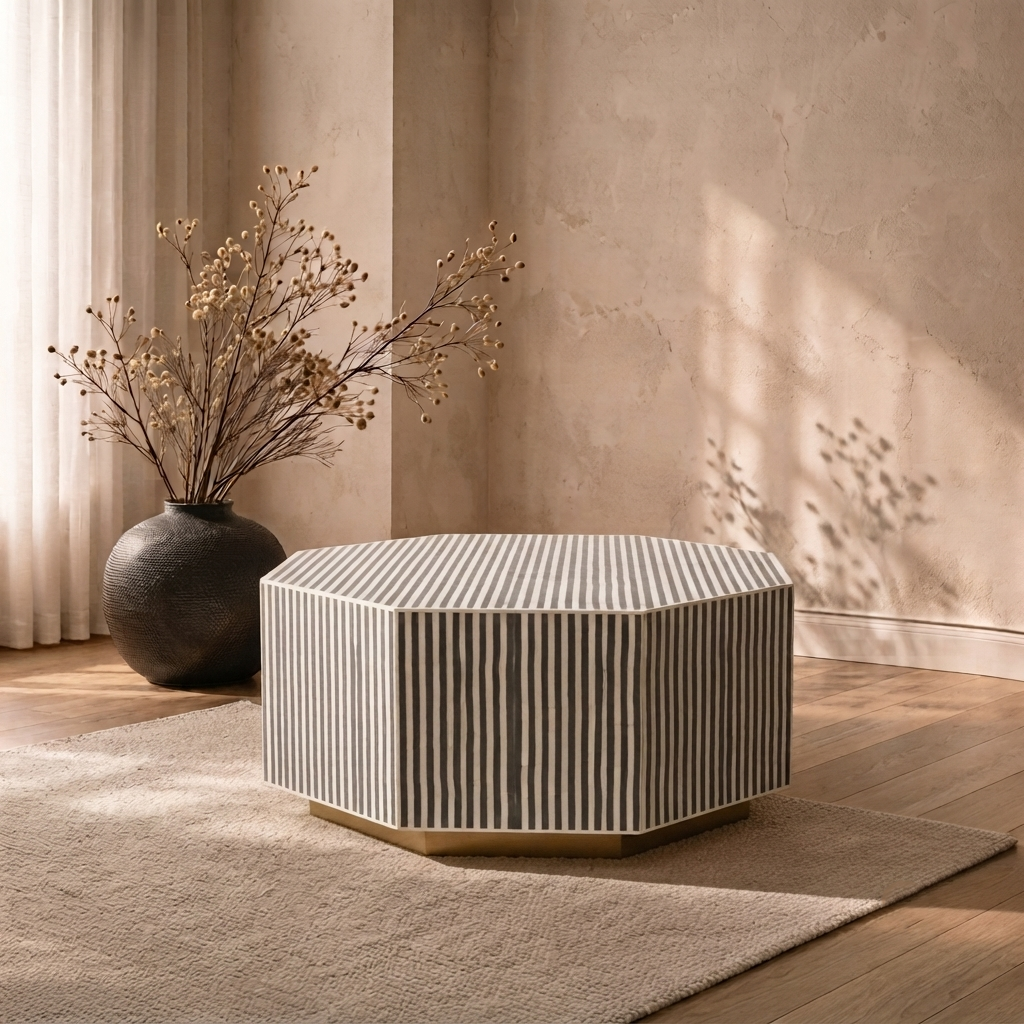
Grey and ivory are useful when the furniture needs to remain sophisticated without becoming visually dominant.
One of the advantages of inlay furniture is that the same pattern can produce completely different results depending on its colour combination.
Mother of Pearl vs Bone Inlay
Designers choosing inlay furniture often need to decide between different surface materials.
Bone inlay generally provides a more matte, graphic appearance, while mother of pearl can introduce a subtle reflective quality.
Mother-of-pearl surfaces can be particularly effective under hospitality lighting.
As guests move through a space, changing light can create small variations across the surface, giving the furniture greater visual depth.
For a luxury hotel lobby or formal villa, this can add another layer to the experience.
CasaGold also offers pieces where customers can select between bone inlay and mother-of-pearl materials depending on the design.
The Lunar Arc Inlay Cabinet, for example, is offered with bone inlay or mother of pearl options and combines a contemporary half-moon silhouette with a highly decorative surface.
How to Balance Inlay Furniture With Other Materials
Inlay furniture becomes most effective when it is surrounded by contrasting textures.
Do not place it in a room where every surface is equally decorative.
Instead, create a hierarchy.
Pair detailed inlay with:
Linen
Bouclé
Natural wood
Travertine
Marble
Brushed brass
Rattan
Plaster walls
Textured fabrics
Handmade ceramics
This contrast allows the inlay to stand out.
For example, an ivory bouclé sofa beside a black-and-white inlay coffee table creates a strong visual relationship. A warm wooden floor beneath an indigo inlay cabinet introduces another layer of contrast.
The goal is not to make everything luxurious.
The goal is to make the luxury feel intentional.
Scale Matters More Than Most Designers Expect
One of the biggest mistakes when specifying statement furniture is ignoring scale.
A beautiful inlay console can look underwhelming against a large feature wall if it is too narrow.
Likewise, an oversized coffee table can make a compact lounge feel crowded.
Before ordering, consider:
Wall width
Walking clearance
Door and lift access
Furniture proportions
Ceiling height
Visual weight
Lighting positions
Required storage
For hospitality projects, also consider circulation and operational requirements.
A visually beautiful piece is not successful if guests constantly have to walk around it.
CasaGold offers made-to-order options across several inlay designs, with customisation available for dimensions, patterns, colours and additional functional features on selected pieces.
This can be particularly useful when a designer is working with unusual wall dimensions or a specific architectural layout.
Using Inlay Furniture as a Brand Signature
One of the most interesting applications is creating a repeated furniture language throughout a property.
Imagine a boutique hotel where the lobby has an inlay console, the suites have matching bedside tables, the lounge has an inlay coffee table and the restaurant includes an inlay sideboard.
The individual pieces do not have to be identical.
They simply need to share a visual vocabulary.
This creates recognition.
The furniture becomes part of the property's identity rather than a collection of unrelated purchases.
For cafés, the same strategy can be used with a signature table, sideboard or display console.
For luxury villas, it can create continuity between the foyer, living room, bedroom and entertainment areas.
Inlay Furniture as Functional Art
The biggest reason to consider inlay furniture is simple: it occupies the space between furniture and art.
A conventional cabinet primarily solves a storage problem.
A well-designed inlay cabinet can solve the storage problem while also becoming a visual feature.
The same applies to consoles, coffee tables, sideboards and bedside tables.
This dual purpose is particularly valuable when designing premium interiors where every object needs to contribute to the overall experience.
CasaGold describes its handcrafted pieces as individually made, with variations in colour, pattern and surface characteristics forming part of the handmade nature of the furniture.
For designers, this is important to communicate to clients.
Handcrafted furniture should not be evaluated by the same standard as factory-produced furniture.
Small variations can be part of what makes each piece distinctive.
Practical Considerations Before Specifying Inlay Furniture
Before finalizing an inlay piece for a hotel, café or villa project, designers should consider more than appearance.
First, confirm the dimensions and ensure the furniture works with the circulation plan.
Second, understand the material and finish so that cleaning and maintenance requirements are clear.
Third, confirm whether the piece is ready to ship or made to order.
Fourth, discuss customisation requirements before production begins.
Finally, check packaging and delivery requirements, particularly for large hospitality projects where several pieces may need to reach the site together.
CasaGold lists ready-to-ship as well as made-to-order pieces, giving designers different options depending on project timelines. View CasaGold's ready-to-ship collection
The Designer's Rule: One Hero Piece Can Be Enough
The easiest way to use inlay furniture successfully is to avoid using too much of it.
One exceptional piece can have more impact than five competing pieces.
In a boutique hotel lobby, it could be the console.
In a café, it could be the coffee table.
In a villa, it could be the living room sideboard or bedroom furniture.
Once the hero piece has been selected, the rest of the room can support it through colour, texture, lighting and proportion.
This creates a more sophisticated result.
Luxury is rarely about adding more.
It is about choosing better.
Final Thoughts
Inlay furniture offers designers an unusual combination of craftsmanship, functionality and visual identity.
For boutique hotels, it can help transform a generic hospitality environment into a memorable destination.
For cafés, it can create distinctive corners and social-media-friendly visual moments.
For luxury villas, it can introduce personality and craftsmanship into otherwise contemporary interiors.
The most successful approach is to treat inlay furniture as part of the architectural story rather than as an isolated decorative object.
Choose the pattern according to the architecture. Select colours that support the palette. Consider scale before aesthetics. Balance detailed surfaces with quiet textures. And most importantly, give statement pieces enough space to be appreciated.
When selected thoughtfully, an inlay console is no longer just a console. An inlay coffee table is no longer simply a table. A handcrafted cabinet becomes part of the identity of the room.
That is what makes inlay furniture so valuable for contemporary hospitality and luxury residential design.
It brings together India's rich tradition of craftsmanship with the clean silhouettes and sophisticated environments expected in modern boutique hotels, cafés and villas.
For designers looking to explore statement pieces for an upcoming project, CasaGold's Inlay Furniture collection is a useful starting point, with handcrafted consoles, coffee tables, cabinets, sideboards, bedside tables and other furniture designed for contemporary interiors.

Written by Cheena Bhasin


Leave a comment
This site is protected by hCaptcha and the hCaptcha Privacy Policy and Terms of Service apply.