


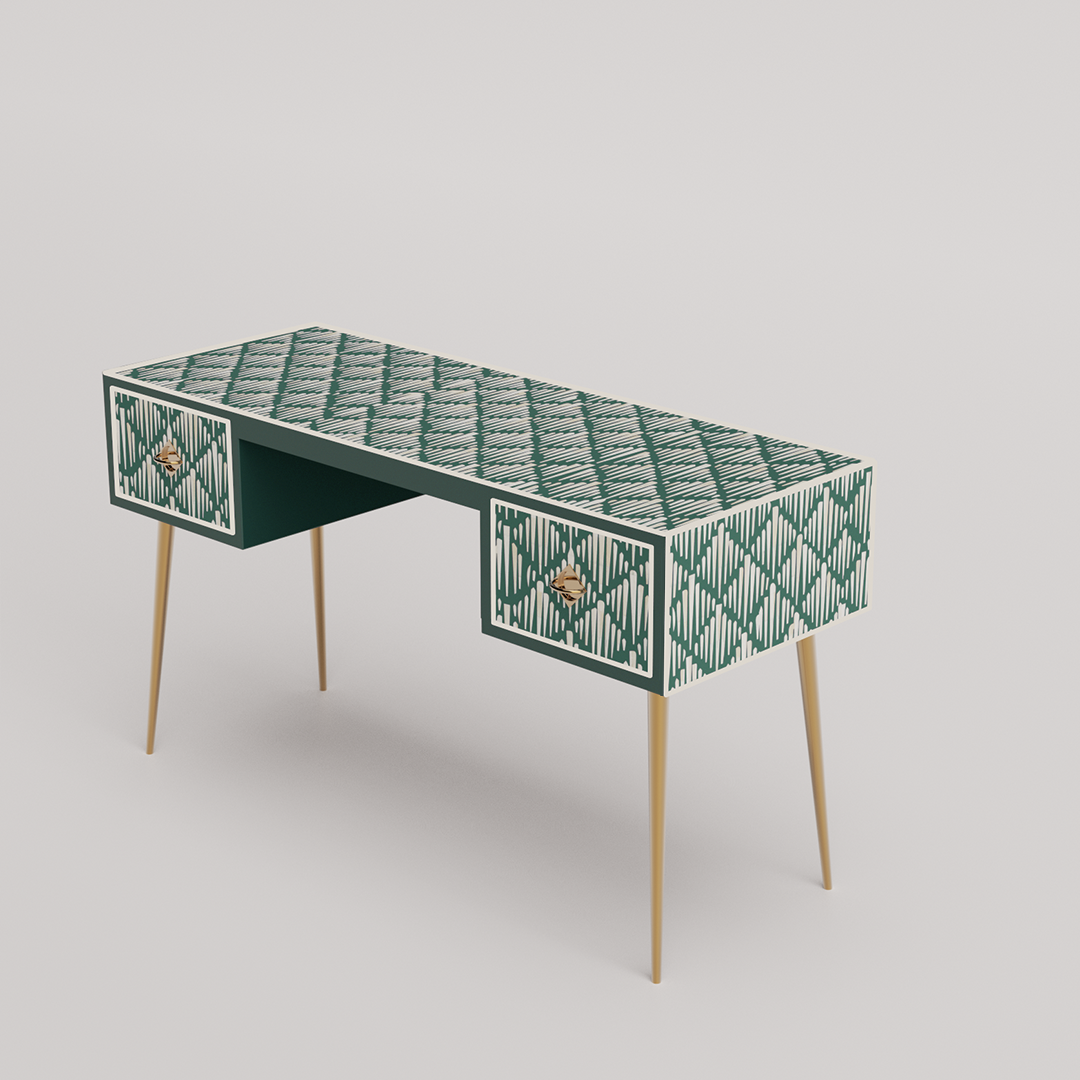
How to Style a Bone Inlay Study Desk: Home Office Ideas for Indian Homes
A home office should be more than a desk pushed against an empty wall. Whether you work remotely, manage a business, study for competitive examinations or need a quiet place to organise your day, your workspace deserves the same attention as the rest of your home.
The challenge is finding furniture that combines practical use with a distinctive design.
A bone inlay study desk offers an interesting alternative to conventional office furniture. Its handcrafted patterns introduce character into a room, while its tabletop provides a dedicated surface for working, reading or studying. When styled thoughtfully, it can feel like a natural part of your interiors rather than a piece of office equipment brought into the home.
For Indian apartments, where a study often shares space with a bedroom or living room, this distinction matters. Furniture must fit the available area, accommodate daily essentials and complement the rest of the room.
This guide explores how to style a bone inlay study desk, choose suitable furniture, arrange lighting and storage, and create a workspace that feels both productive and visually considered.
1. Why Choose a Bone Inlay Study Desk for Your Home?
Most conventional study desks prioritise utility, often using plain wood, metal frames or uncomplicated finishes. These designs can be practical, but they do not always contribute much to a carefully styled interior.
A bone inlay study desk offers a different approach. Decorative patterns create a focal point, while the desk remains a functional part of your everyday routine.
Depending on the design, the inlay may feature geometric arrangements, floral motifs or repeating patterns. Contrasting colours can introduce definition into a neutral room, while more understated finishes complement existing furniture without demanding attention.
This makes an inlay desk particularly useful for multipurpose spaces.
In a bedroom, it can serve as a compact workstation while complementing the bed and bedside furniture. In a living room, it can occupy an available wall and provide a dedicated place to work without making the entire room feel like an office.
A handcrafted desk can also bring visual continuity to a room that already includes decorative mirrors, patterned furniture or carefully selected accessories.
Explore the CasaGold study desk collection to discover different inlay patterns and finishes for a home workspace.
2. Find the Right Location Before Choosing Your Desk
The most attractive desk will not make a good workstation if it blocks a doorway, receives constant glare or leaves insufficient room for a chair.
Begin by identifying where you spend the least time dealing with household distractions. An unused bedroom wall, a quiet corner near a window or a dedicated study area may offer a suitable starting point.
A desk near the window
Natural light can make a workspace feel inviting. Positioning the desk perpendicular to a window often provides useful daylight while reducing direct glare on a computer screen.
If the only available position faces the window, consider curtains or blinds to control brightness throughout the day.
A desk in the bedroom
A bedroom workstation can be effective when there is no separate study room. Choose a wall that allows you to sit comfortably without interfering with wardrobe doors, bedside access or the main walking path.
Use a desk lamp and organised storage to establish a defined working area. At the end of the day, putting away papers and closing your laptop helps distinguish work time from rest.
A desk in the living room
An inlay study desk can function as a decorative furniture piece when a living room needs an occasional workstation.
Place it against an available wall and coordinate its finish with the existing furniture. Avoid positioning it directly in the main traffic route or where computer activity will interrupt conversations and relaxation.
Before buying, measure the available width, depth and height. Also measure the space needed for your chair, legs, drawers and cables. The desk should fit the room without making movement awkward.
3. Choose a Desk Size That Supports Your Daily Routine
A desk can look compact in a product photograph and feel very different once a laptop, monitor, keyboard, notebooks and lamp are placed on it.
Think about how you actually work before deciding which design suits you.
For laptop-based work
If you primarily use a laptop and notebook, a relatively compact work surface may be sufficient. Keep the centre of the desk clear for your computer and reserve one side for writing or placing a drink.
A laptop stand and separate keyboard can improve your working posture without occupying excessive space.
For a monitor and accessories
A desktop computer or external monitor usually needs more depth than a laptop alone. Check the manufacturer's desk dimensions and allow enough space for the screen, keyboard and comfortable viewing distance.
Cable connections and monitor stands also need room, so avoid judging the available surface by its overall width alone.
For study and examination preparation
If your routine involves books, reference materials and handwritten notes, prioritise a desk that accommodates open books alongside your writing area.
Storage becomes especially useful when several subjects or projects are in progress. Drawers can keep stationery and smaller items organised, while separate shelves may accommodate books and files.
CasaGold's Majestic Inlay Study Desk is one option to examine if you need a decorative workstation with multiple drawers. Review its listed dimensions and specifications against your requirements before deciding.
The best desk is not necessarily the largest. It is the one that accommodates your actual workflow without overwhelming the available room.
4. Match the Inlay Pattern to Your Interior Style
The pattern is often the first thing people notice about a bone inlay desk. Its colour and visual density can influence the entire appearance of a workspace.
Choosing a pattern that relates to your existing décor makes the desk easier to incorporate into your home.
Geometric patterns for modern interiors
Geometric designs work well in rooms with clean lines, neutral walls and contemporary furniture.
A geometric inlay desk can introduce detail without requiring additional patterned accessories. Pair it with a simple office chair, understated artwork and a minimal desk lamp.
Floral patterns for softer interiors
Floral motifs can complement bedrooms and living spaces with upholstered seating, textured curtains and softer colours.
Choose accessories that pick up one of the desk's existing tones. A neutral ceramic vase, restrained artwork or a fabric chair can help create a cohesive arrangement.
High-contrast designs for statement spaces
Black-and-white inlay can create a strong focal point against light walls. It is particularly effective when the surrounding furniture has understated finishes.
Avoid combining it with too many competing patterns. The desk already provides visual interest, so a simple backdrop will often give it more impact.
Coloured inlay for a distinctive workspace
Teal, sea green, indigo and other coloured finishes can introduce personality into neutral rooms.
If your home office shares space with a bedroom or living room, repeat a small amount of the desk's colour through a cushion, artwork or accessory. This helps the furniture feel connected to its surroundings.
Browse the CasaGold desk collection to compare the available patterns and finishes.
5. Pair Your Desk with the Right Chair
An attractive desk needs a chair that suits the way you work.
Because a home office is part of a living environment, it is tempting to select a chair based entirely on its appearance. Comfort and fit should come first, especially when you spend several hours at the desk.
Choose a chair that allows you to sit with your feet supported, shoulders relaxed and elbows comfortably positioned near desk height. If the chair has adjustable height and back support, it becomes easier to adapt the setup to your body.
Check the distance between the underside of the desk and the seat. A chair may appear suitable but still leave insufficient knee clearance when positioned correctly.
Match the chair without copying the desk
The chair does not need to share the exact finish or pattern of the desk.
A neutral upholstered chair can soften an elaborate inlay pattern. A simple wooden chair can work in a room with warm timber floors, while a darker chair can create contrast against a pale desk.
If your desk has a strong decorative finish, keep the chair relatively simple. This allows the furniture to stand out while preventing the workspace from feeling overdesigned.
For prolonged work sessions, prioritise comfort and adjustability over purely decorative details.
6. Get the Lighting Right for Work and Video Calls
Lighting is one of the most overlooked parts of a home office.
A room may look attractive in daylight but become uncomfortable when you use a computer in the evening. Poorly positioned lights can also create screen glare, shadows across paperwork or an unflattering appearance during video calls.
Build your lighting around three practical needs.
Ambient lighting
This provides general illumination throughout the room. Existing ceiling lights may be sufficient as a starting point, although their position and brightness will affect how evenly the workspace is lit.
Task lighting
A desk lamp gives you more control over the light falling on books, paperwork and the immediate work surface.
Choose a position that avoids casting your hand's shadow across the page. Check whether the lamp's base takes up too much of the desk, especially if the surface is relatively compact.
Video-call lighting
Think about the background as well as your face. Sitting with a bright window directly behind you can create a silhouette, while a plain wall or carefully arranged bookshelf can provide a cleaner background.
Position the light so that your face is visible without a harsh reflection on the computer screen.
If you choose a decorative lamp to complement your inlay desk, make sure its practical purpose remains clear. The desk should be comfortable to use, not simply look attractive in photographs.
7. Keep the Desk Organised Without Hiding Its Design
Decorative furniture looks its best when its important details remain visible.
A crowded desk can obscure the inlay pattern and make even a well-designed workspace feel chaotic. The solution is not to eliminate useful objects but to assign them a clear place.
Start by dividing the surface into functional areas.
Keep your laptop or monitor in the main working zone. Reserve a smaller section for writing materials, and use a compact organiser for pens, clips and frequently used stationery.
Items you rarely use should go into drawers or nearby shelving rather than remain on the tabletop.
Manage cables before adding accessories
Chargers, extension leads and monitor cables can quickly create visual clutter.
Group cables neatly, use suitable clips or cable-management accessories, and keep electrical connections accessible. Avoid routing cables where they create a tripping hazard or interfere with drawers.
Use organisers selectively
A desk organiser can keep essential stationery together without requiring multiple containers.
Explore the CasaGold office desk accessories when choosing finishing pieces, and look for organisers that suit the space available.
Avoid adding decorative objects simply to fill an empty surface. A clean working area makes it easier to use the desk and gives the inlay design room to be appreciated.
8. Create Storage That Works Beyond the Desk
The desk is only one part of the workspace. Books, documents, charging accessories and reference materials also need somewhere to go.
In a small home, additional storage should support the workstation without filling every available wall.
Use drawers for everyday essentials
Drawers are useful for stationery, notebooks, cables and small accessories that would otherwise remain scattered across the desk.
Check the interior dimensions and drawer configuration before purchasing. The presence of drawers does not automatically mean they will accommodate every object you need to store.
Add vertical storage where appropriate
Wall shelves or a book rack can keep reference materials accessible while freeing the tabletop.
Ensure shelves are installed securely and are positioned where they will not interfere with your chair or movement around the desk.
Keep work and personal items separate
When your office shares a bedroom or living room, organisation helps preserve the room's original function.
Store work papers in a designated drawer or file holder. At the end of the day, return essential items to their places so the area can become part of the home again.
For a broader furniture selection, explore the CasaGold home office collection.
The aim is to create a workspace that remains useful throughout the week without spreading work-related clutter across the room.
9. Style the Wall Behind Your Desk
The wall behind a desk can turn a functional corner into a considered part of your interior.
It may also appear in the background during video calls, so its appearance deserves a little attention.
For a minimal look, one framed artwork or a simple mirror can provide enough visual interest. A small number of shelves can introduce storage, provided they are positioned safely and do not make the wall feel crowded.
If your desk has a detailed geometric or floral pattern, choose artwork that complements the colours without competing with the furniture.
A pale wall can help a darker desk stand out. A warmer wall colour may work better when the furniture has cream, beige or natural wood tones.
Lighting can also help distinguish the desk area from the rest of the room. A suitable wall light or desk lamp can provide practical illumination while making the corner feel more intentional.
Avoid placing too many decorative elements directly behind your screen. A clean background is easier to maintain and reduces visual distraction during work.
10. Choose a Workspace Palette That Feels Connected to Your Home
A home office does not need a separate colour scheme from every other room.
In fact, repeating a few colours across the desk, seating, wall décor and textiles can make the workspace feel like a natural extension of the home.
For a neutral interior, consider cream, beige, natural wood and subtle black accents. These shades allow decorative inlay patterns to remain the main feature.
For a richer palette, combine a coloured desk with warm wooden accessories, restrained metallic details and lighter textiles.
If the desk is in a bedroom, repeat a colour already present in your bedding or curtains. In a living room, pick up tones from the sofa, rug or artwork.
Think about visual balance as well as matching colours. A dark desk against a light wall can create a strong focal point, while a lighter desk in a room with dark furniture can introduce contrast.
You do not need to buy a matching furniture set. Often, two or three repeated colours are enough to connect different pieces.
11. Care for Your Bone Inlay Study Desk
A study desk is used frequently, so regular care matters.
Dust the surface with a soft cloth and follow the manufacturer's cleaning instructions. Avoid abrasive materials, harsh chemical cleaners and excessive water, particularly around inlay details and joints.
Use a desk mat when appropriate to protect the surface from repeated friction caused by keyboards, accessories and other equipment.
Keep drinks in suitable containers and clean up spills promptly. Use coasters where condensation may affect the finish.
Avoid leaving the desk exposed to prolonged direct sunlight or persistently damp conditions. Natural wood and decorative finishes can respond to changes in temperature and moisture, so a stable indoor environment is preferable.
When moving the desk, lift it appropriately rather than dragging it across the floor. Confirm its weight and handling requirements before attempting to move it.
Because handcrafted furniture can have natural variations in pattern and finish, review the product description carefully before ordering. Also check delivery details, customisation options and return conditions.
These simple habits help protect the furniture while allowing it to remain part of your daily routine.
Frequently Asked Questions
Is a bone inlay study desk suitable for a modern home office?
Yes. Its decorative pattern can introduce character into a contemporary workspace. Pair it with a comfortable chair, practical lighting and restrained accessories to balance appearance with functionality.
Can I use a bone inlay desk in a bedroom?
Yes. A desk can fit into an available bedroom corner when its size, chair clearance and position are planned carefully. Use organised storage and a simple styling scheme to keep the sleeping area comfortable.
Which colour is best for a bone inlay study desk?
The best colour depends on your existing décor. Black and white creates strong contrast, while teal, indigo and sea green introduce colour. Neutral finishes can suit rooms with more elaborate artwork or textiles.
How do I choose the right desk size?
Consider your available floor space and daily work requirements. Measure the room, chair clearance and furniture footprint, then check whether your laptop, monitor, keyboard and paperwork will fit comfortably on the surface.
What accessories should I keep on a study desk?
Start with the essentials: your computer, stationery organiser, task lamp and any materials you use every day. Store less frequently used items in drawers or shelving rather than crowding the tabletop.
How do I maintain handcrafted inlay furniture?
Use gentle cleaning methods recommended by the manufacturer, wipe spills promptly and protect the surface from excessive moisture, harsh chemicals and prolonged direct sunlight.
Find a Study Desk That Reflects Your Style with CasaGold
A well-designed workspace should support your routine while contributing to the way your home looks and feels.
A bone inlay study desk can provide that balance through its handcrafted detail, distinctive patterns and practical working surface. The key is to choose a suitable size, pair it with a comfortable chair, arrange useful lighting and keep the surrounding area organised.
Whether you are furnishing a dedicated study, improving a bedroom corner or creating a workspace in your living room, begin with your daily needs and the space available.
Explore the CasaGold study desk collection, discover the Majestic Inlay Study Desk, or browse the home office collectionfor more ideas.
With thoughtful planning, your workspace can be practical enough for everyday use and distinctive enough to feel like an integral part of your home.

Written by Cheena Bhasin


Leave a comment
This site is protected by hCaptcha and the hCaptcha Privacy Policy and Terms of Service apply.