

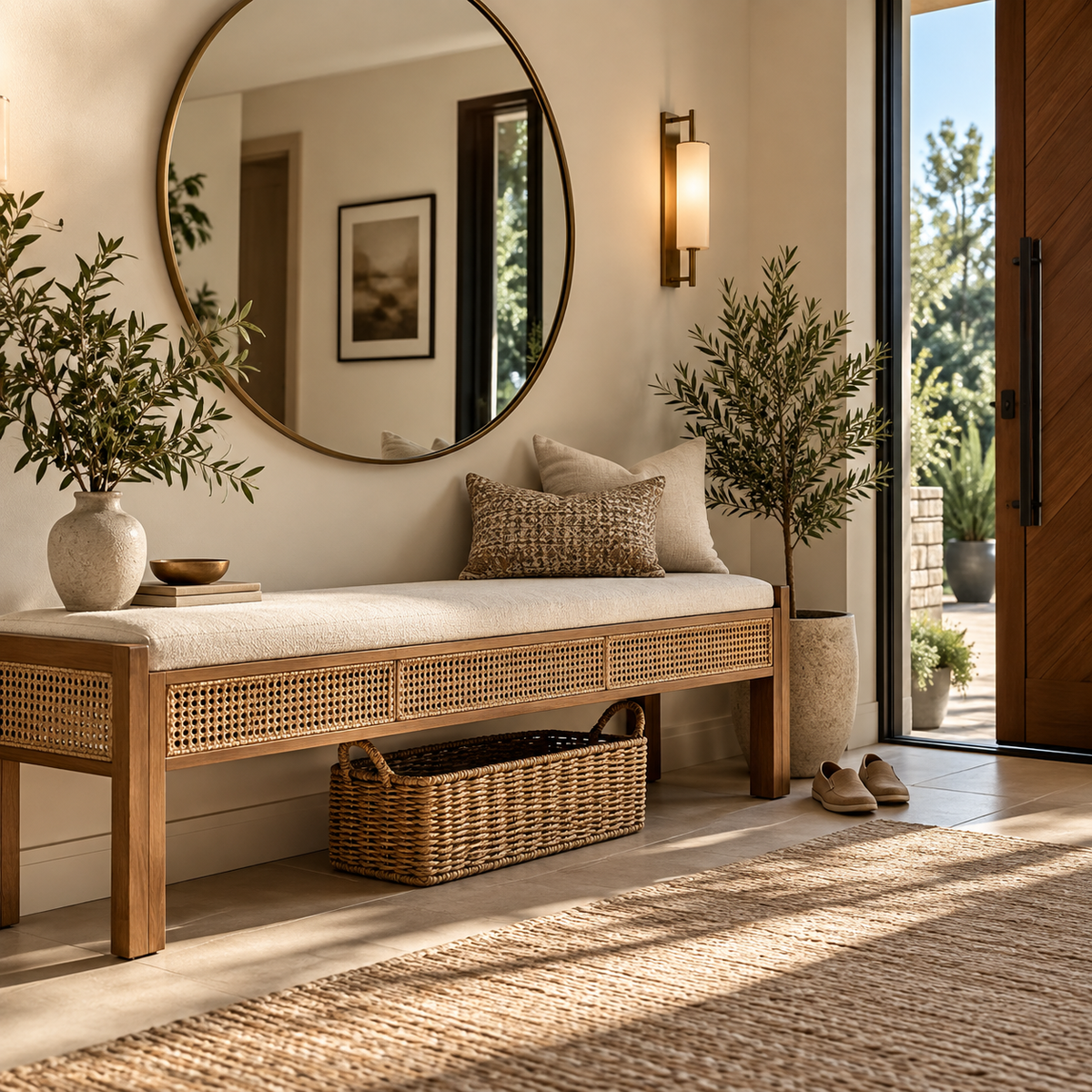
How to Choose the Right Entry Bench for Your Home
Choosing the right entry bench for your home sounds simple until you start looking at size, seating height, materials, storage, and the amount of space you actually have. An entry bench has to do more than fill an empty wall. It should make getting in and out of the house easier, provide a practical place to sit, and fit naturally into the look of your interior.
A well chosen entry bench can also give your entrance a finished appearance. Instead of shoes, bags and small objects collecting around the front door, you can create a defined area that feels intentional and organised.
The best choice depends on how your entryway is used, the amount of room available, the furniture already in your home, and the role you want the bench to play.
What Is an Entry Bench?
An entry bench is a compact seating piece designed for a hallway, foyer or entrance area. It can be used for sitting while putting on shoes, placing a bag temporarily, styling decorative objects, or creating additional storage when the design includes a shelf, drawer or compartment.
Unlike a dining bench, an entry bench does not need to be designed around a table. Its proportions are usually chosen to work with the circulation space around an entrance.
For some homes, the bench is mainly functional. For others, it can become one of the first decorative features guests notice.
Before choosing one, think about what you want it to accomplish. Do you need everyday seating? A place for footwear? Extra storage? Or simply a strong furniture piece that gives the entrance more character?
How to Measure Your Entryway Before Buying a Bench
Measuring first is the most important step.
Start with the available wall width. Then measure the distance from the wall to the opposite side of the hallway. This tells you how much depth the bench can occupy without making the entrance feel tight.
Do not forget about doors.
Check the swing of the main entrance door, cupboard doors and nearby bedroom or utility doors. A bench can look perfectly proportioned on paper but become inconvenient if a door opens directly into it.
Create a simple outline of the bench on the floor using masking tape. This is a surprisingly useful way to understand its real footprint. Walk through the space, open the doors, and imagine two people passing each other.
You also need to consider the height of the bench. A comfortable seating height for many adults is generally around 17 to 19 inches, although the ideal measurement depends on the design, cushion thickness and the people using it.
Depth matters as well. A deeper bench can feel more substantial and comfortable, but a shallow profile may work better in a narrow hallway.
Think About How Your Entrance Is Actually Used
The right entry bench for a one person apartment may be completely different from the right one for a busy family home.
If the entrance is mainly used to remove footwear, a simple upholstered or cane bench may be enough.
If children use the area every day, easy access and durability become more important.
If guests enter through the same doorway, appearance becomes a bigger part of the decision.
Take a few days to notice what happens around your entrance. Where do shoes collect? Where do bags get dropped? Do people sit down to put on footwear or stand near the door? Does clutter build up because there is nowhere to place everyday items?
This tells you what the bench actually needs to solve.
Furniture works best when it responds to the way you already live instead of forcing you to create a completely new routine.
Choose the Right Bench Width
Width should be based on the available wall space and the amount of seating you need.
A compact entry bench can work well in an apartment, narrow foyer or smaller townhouse entrance. A wider bench can make sense in a large hallway where more than one person needs to sit at the same time.
Avoid choosing the longest bench that fits just because there is empty wall space. An oversized piece can make a small entrance feel heavy.
At the same time, do not make the bench so small that it looks disconnected from the surrounding architecture.
A useful approach is to compare the bench with nearby features. If you have a large doorway, wide mirror or substantial console, a tiny bench may disappear visually. If the entrance is narrow and minimalist, a compact design will usually create better balance.
The goal is proportion, not maximum size.
Choose the Right Depth
Depth is often overlooked because shoppers focus on width.
In a generous foyer, you can use a deeper bench without affecting movement. In a narrow hallway, even a few extra inches can change how comfortable the space feels.
Before ordering, mark the full depth on the floor.
Then stand where people would normally walk.
Can you comfortably open the door? Can someone pass while another person is seated? Is there enough room to carry groceries, luggage or larger objects through the entrance?
These everyday questions matter more than how the bench looks in a product photograph.
A beautiful bench that blocks circulation will become frustrating very quickly.
Consider the Seating Height
An entry bench should be comfortable enough for everyday use.
A very low bench may look stylish but can be difficult to get up from, particularly for older family members. A very high bench can make putting on shoes awkward.
Most standard benches sit within a comfortable range for adults, but upholstery thickness, cushion design and the user's height can change how the finished piece feels.
If several family members will use the bench, prioritise comfort and practicality over a purely decorative silhouette.
If the bench is primarily decorative, you have more flexibility. But even then, choosing a usable height can make the furniture more versatile because it can later move into another room.
Decide Whether You Need Storage
Not every entry bench needs storage.
A simple open bench can create a cleaner, lighter appearance. It can also be easier to style.
Storage becomes useful when the entrance is a high traffic area.
You might want space for everyday footwear, slippers, bags, umbrellas or other accessories. A lower shelf is often enough for items you need to access quickly.
If you need concealed storage, look for drawers or a lift up seat. These options can keep the entrance visually clean while giving you somewhere to hide less attractive everyday items.
The important thing is to choose storage based on real use. A bench with several compartments may sound practical, but if the entrance is already spacious and tidy, extra storage can add visual weight without providing much benefit.
Sometimes an open, beautifully finished bench is all the room needs.
Choose a Material That Fits Your Interior
Material has a huge influence on how an entry bench feels.
Timber can create warmth and a natural look. Metal can make a space feel sharper and more contemporary. Upholstery introduces softness and comfort. Woven cane can create texture and a relaxed, handcrafted character.
The right material should connect with what is already in the home.
Look at your flooring, doors, console tables, wall colour and nearby seating. You do not need everything to match exactly. The goal is to create a visual relationship between the materials.
For example, a timber bench can complement warm wood flooring without being made from the exact same finish. A cane bench can add texture to an otherwise neutral hallway. An upholstered bench can soften an entrance dominated by hard surfaces.
CasaGold's Capitol Cane Bench is one example of a piece designed around a combination of function and texture. It uses a teak frame with woven natural rattan and is positioned by CasaGold for spaces including entryways. The listed dimensions are 52.25 inches wide, 17.3 inches high and 17.7 inches deep.
For a more decorative direction, CasaGold also offers the Harmony Inlay Upholstered Bench in several colours.
Choose a Style That Matches Your Home
Your entryway should feel connected to the rest of the house.
A modern home with simple lines may suit a streamlined bench.
A traditional interior can accommodate carved details, richer timber tones or more decorative upholstery.
A relaxed coastal interior can work with woven textures and lighter finishes.
A more expressive interior can handle a statement bench with pattern or colour.
The key is balance.
A statement bench does not need several statement accessories around it. Let the furniture do the work.
If the bench has an interesting shape, material or pattern, keep the surrounding styling relatively simple. This gives the eye a clear focal point and prevents the entrance from feeling overcrowded.
Where Should an Entry Bench Go?
The most obvious position is against the wall near the main entrance.
This creates an easy routine. You enter, sit down, remove your footwear, and continue into the home.
However, the same idea can work in other areas.
An entry bench can sit below a window, along a long hallway, near a wardrobe, beside a staircase, or in a secondary entrance used by the family.
In a larger property, creating a bench near a garage or side entrance can also make sense. The best location is usually the one where people naturally stop, remove footwear, or put down everyday items.
Think about behaviour first and decoration second.
The best location is not always the one that looks most attractive in an empty room. It is the location that makes daily life easier.
How to Style an Entry Bench
You do not need to fill every inch of the bench.
Keep the seat clear if it is used regularly.
Instead, use the wall above it.
A mirror is one of the most practical choices because it can make the entrance feel brighter and gives you a final place to check your appearance before leaving.
Artwork can work well when the entrance is wider and there is enough visual space around the bench.
A small basket underneath can hold slippers or accessories.
A plant can soften the area.
A small bowl or tray can provide a defined place for keys when positioned safely.
The secret is to keep the arrangement functional. An entryway is a working part of the home, not simply a display area.
How to Choose an Entry Bench for a Small Home
Small entrances require more attention to scale.
Start with a compact width and shallow depth.
Open designs can also help the room feel less crowded because you can see more of the floor beneath them.
Light coloured upholstery, woven materials and slimmer legs can visually reduce the weight of the bench.
If storage is necessary, choose a design that combines seating and storage rather than adding separate furniture pieces.
This is one of the strongest advantages of an entry bench. One piece can perform several jobs without making the space feel overloaded.
A smaller entrance does not mean you need to compromise on design. It simply means every measurement matters more.
How to Choose an Entry Bench for a Large Foyer
Large foyers create the opposite problem.
A tiny bench can look lost in the space.
In a generous entrance, look at the scale of the architecture. A wider bench can create a stronger focal point, especially when paired with a large mirror, artwork or console.
You can also use a substantial upholstered bench to introduce softness into a room with stone floors, timber panels or large architectural surfaces.
Do not feel that every piece has to be pushed against a wall. If the space allows it, a bench can sometimes sit within a larger furniture arrangement.
Think about the overall composition rather than one piece in isolation.
A large room needs furniture with enough visual weight to feel intentional.
Should Your Entry Bench Have a Backrest?
This depends on the available space and how you plan to use it.
A backless bench takes up less visual and physical space. It can also look cleaner in a narrow hallway.
A bench with a backrest can provide additional comfort and a stronger furniture presence, but it requires more depth and can visually occupy more of the wall.
For most compact entrances, a backless design is easier to work with.
For a larger foyer where comfort is more important, a backed or upholstered design can become a strong feature.
If you are unsure, compare the bench with the scale of your other furniture. A backrest adds height and can make the piece feel more substantial. That can be useful in a large entrance but unnecessary in a compact one.
Consider Durability and Maintenance
An entry bench is likely to experience more everyday use than many decorative furniture pieces.
People will sit on it, place bags on it, and occasionally use it as a temporary landing spot for shopping or other items.
Look at the materials and finish before buying.
For upholstered benches, check cleaning and fabric care requirements.
For timber, understand how the finish should be maintained.
For natural cane, avoid excessive moisture and follow the maker's care recommendations.
CasaGold's Capitol Cane Bench, for example, recommends using a cushion or seating pad for regular use to help prolong the life of the cane.
A little maintenance goes a long way toward keeping an entry bench looking good.
Think Beyond the Entrance
A good entry bench can remain useful even if you later change your hallway design.
Choose a piece versatile enough to move into another room.
An adaptable bench can work at the foot of a bed, in a dressing area, against a living room wall, or in a larger bedroom.
This is another reason to choose timeless proportions instead of following a short lived furniture trend.
You want a piece that can evolve with your home.
Furniture becomes a better investment when it can change roles as your space changes.
Entry Bench Ideas for Different Home Styles
Different interiors call for different approaches.
Contemporary Home
Choose clean lines, simple proportions and restrained colours. A streamlined bench can sit comfortably alongside modern flooring, neutral walls and minimal accessories.
Traditional Home
Look for richer materials, detailed craftsmanship and warmer finishes. A more substantial bench can complement classic architectural features.
Coastal Home
Natural textures work especially well. Cane, timber and neutral upholstery can create a relaxed look without making the entrance feel overly decorated.
Luxury Interior
This is where the bench can become a statement piece. Upholstery, distinctive finishes, sculptural forms or decorative craftsmanship can give the entrance a stronger identity.
The key is to choose one clear visual direction and let it carry through the space.
What Makes an Entry Bench Look Premium?
A premium furniture piece is not simply about price.
Details matter.
Look at the proportions.
Examine the materials.
Pay attention to the finish.
Consider the construction.
Check the upholstery.
Look at the edges, joints and overall workmanship.
These details determine how a piece feels once it is actually inside your home.
For handcrafted furniture, subtle variations can also contribute to the character of the piece.
The objective is not to make furniture look identical to every other piece.
It is to create something with a sense of craftsmanship and individuality.
This matters even more in an entrance because the furniture is often one of the first things people see.
Questions to Ask Before Buying an Entry Bench
Before you purchase, check the exact dimensions.
Measure the available space.
Check door clearance.
Confirm the seating height.
Decide whether you actually need storage.
Consider who will use the bench.
Look at the materials and care requirements.
Think about whether it can work in another room later.
If you are purchasing a larger handcrafted furniture piece, review delivery, packaging and after sales information before placing the order.
A few minutes of planning can save you from choosing a piece that looks good online but feels awkward in the actual space.
Frequently Asked Questions
What is the ideal height for an entry bench?
For many adults, a seating height around 17 to 19 inches is comfortable. The right height still depends on the user's needs, cushion thickness and the overall design.
How deep should an entry bench be?
There is no single ideal depth. A deeper bench can feel more comfortable, while a shallower bench is usually easier to fit into a narrow hallway. Always prioritise comfortable circulation around the furniture.
Should an entry bench have storage?
Only if you need it. Storage is useful for high traffic entrances, but an open bench can look lighter and more elegant when additional storage is not necessary.
Can an entry bench be used in another room?
Yes. Many entry benches can later be used at the foot of a bed, in a dressing area, living room or bedroom. Choosing a versatile design gives you more flexibility.
What material is best for an entry bench?
That depends on your lifestyle and interior. Timber offers warmth, cane brings texture, upholstery adds comfort, and metal can create a more contemporary appearance.
How do I choose the right size entry bench?
Measure the available wall width and depth first. Check door movement, walking space and the number of people who will use the bench. Then compare those measurements with the exact product dimensions.
Final Thoughts
Choosing the right entry bench is less about finding the biggest, most decorative or most expensive piece and more about getting the proportions and purpose right.
Start by measuring the entrance.
Think about how your household uses the space.
Choose a width and depth that allow people to move comfortably.
Select a material that works with the existing interior.
Decide whether you need storage or simply a place to sit.
Then add styling elements that support the furniture without creating clutter.
A thoughtfully chosen entry bench can make a surprisingly big difference. It can give everyday items a defined place, provide a practical seat, add texture to an empty hallway and create a more finished first impression.
Whether you prefer woven cane, warm timber, upholstery or a more decorative handcrafted finish, the best bench is the one that feels natural to use every day and visually connected to the home around it.
For homes that call for furniture with more personality than standard mass produced pieces, handcrafted designs can bring an extra layer of character to the entrance. CasaGold's current collection includes both woven cane and upholstered bench designs that can work in different interior settings.
Explore CasaGold's furniture collection and choose an entry bench that makes your entrance more useful, more comfortable and more distinctly yours.

Written by Cheena Bhasin



Leave a comment
This site is protected by hCaptcha and the hCaptcha Privacy Policy and Terms of Service apply.